
Ciao (2026)

March 3, 2026
Ciao (2026) is an emotionally devastating and beautifully restrained gay drama that explores grief, intimacy, and the fragile threads that bind strangers together. Set against the hauntingly romantic backdrop of Rome, the film opens with a quiet tragedy: Mark, a reserved American writer in his mid-thirties, receives news that his long-distance Italian boyfriend, Luca, has died suddenly in a motorcycle accident. Their relationship had existed mostly through late-night video calls, half-finished travel plans, and whispered promises of a future neither had fully stepped into. Consumed by regret and longing, Mark flies to Italy to attend Luca’s funeral—only to discover that he was not the only one who believed he was Luca’s great love.
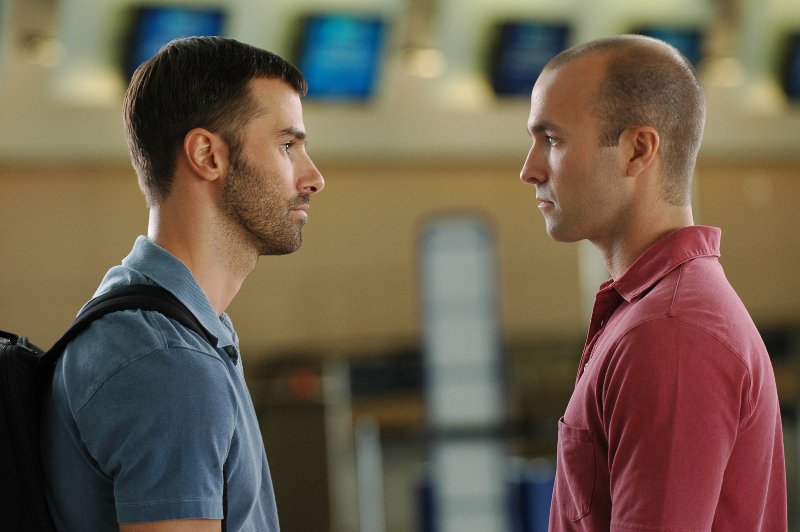
From the moment Mark arrives, the film immerses us in emotional discomfort. Luca’s family barely acknowledges his presence, unaware of the depth of their son’s secret life. The tension intensifies when Mark meets Andrea, a magnetic yet guarded Italian man who had also been romantically involved with Luca. Andrea is everything Mark is not—confident, passionate, physically present in Luca’s daily world. Their first encounter is sharp with jealousy and disbelief, each man quietly measuring the other’s grief as if pain were something to be claimed. Yet beneath the rivalry lies a shared devastation neither can escape. The story unfolds not as a confrontation, but as an uneasy alliance between two broken hearts trying to understand the same ghost.
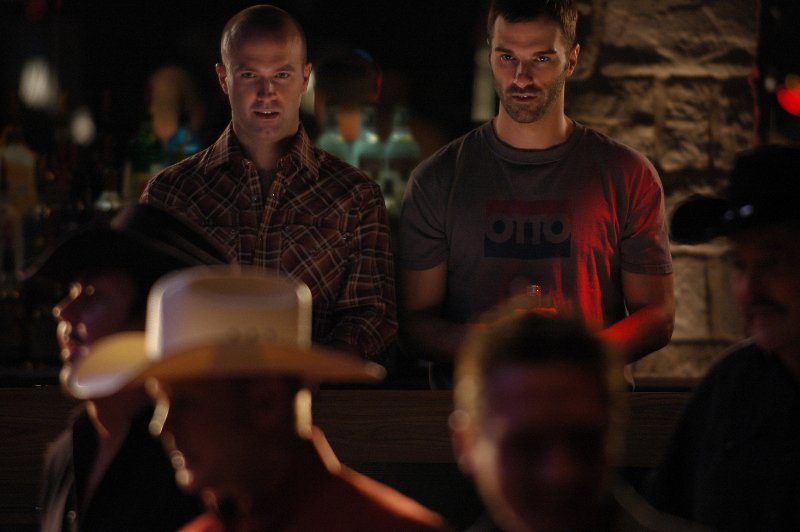
As the days pass in Rome, Mark and Andrea begin retracing Luca’s life—his favorite café near Trastevere, the rooftop where he watched sunsets, the hidden art studio he never mentioned. Each location becomes a layer peeled back, revealing how differently Luca loved each of them. Through fragmented memories and unsent messages found on Luca’s phone, the film constructs a portrait of a man who was deeply afraid of choosing one life over another. Rather than vilifying him, Ciao treats Luca as achingly human: a romantic caught between emotional safety and physical passion, terrified of hurting either man yet inevitably hurting both. The narrative delicately asks whether love divided is love diminished—or simply complicated by fear.
What elevates Ciao (2026) beyond a conventional love triangle is the evolving connection between Mark and Andrea. Their shared mourning becomes an unexpected bridge. Late-night conversations spill into vulnerable confessions about identity, cultural differences, and the loneliness of loving someone who never fully arrived. There is a breathtaking scene where they sit on opposite sides of Luca’s empty apartment, reading old texts aloud, their voices cracking in unison. In that moment, the rivalry dissolves into recognition: they were both searching for the same reassurance, the same “I choose you.” Slowly, grief transforms into something startlingly tender. The film never rushes this transition; it allows silence, glances, and restrained gestures to speak volumes.

Visually, the movie is drenched in muted golds and cool blue shadows, capturing Rome not as a tourist fantasy but as a city heavy with memory. The camera lingers on small details—a hand hovering before touching another, condensation on a wine glass, a voicemail replayed too many times. The soundtrack, sparse and melancholic, underscores the emotional weight without overwhelming it. Performances are raw and deeply internal. The actor portraying Mark delivers heartbreak with restrained subtlety, while Andrea’s portrayal burns with contained intensity, creating a dynamic that feels authentic rather than melodramatic. Their chemistry evolves from friction to fragile warmth in a way that feels earned and profoundly moving.

By its final act, Ciao (2026) becomes less about Luca and more about the possibility of beginning again. In a quietly powerful ending set at the Roman coast at dawn, Mark and Andrea scatter Luca’s ashes together, not as rivals but as two men who have learned that grief can connect as deeply as love. The film closes not with a grand declaration, but with a simple shared look—an unspoken understanding that while Luca brought them together, what grows next belongs solely to them. Ciao is not just a story about loss; it is a meditation on second chances, emotional honesty, and the courage it takes to remain open after heartbreak. It lingers long after the credits roll, whispering that sometimes goodbye is only the beginning.