
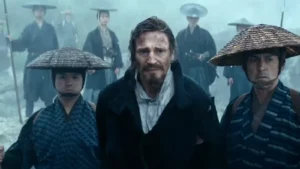
Silence (2016) Liam Neeson, Komatsu Nana
November 21, 2025
Silence (2016) is a haunting, meditative epic that plunges viewers into the very heart of faith, suffering, and human resilience. From its opening moments, the film establishes an atmosphere of oppressive beauty—lush forests veiled in mist, crashing waves that swallow entire villages, and a Japan that feels simultaneously breathtaking and merciless. Martin Scorsese crafts a world where silence is not merely the absence of sound, but a presence that lingers, follows, and confronts. It is within this quiet vastness that the film’s spiritual battle begins.

At the center of the story are two Jesuit priests, portrayed with raw emotional precision, who embark on a dangerous journey to Japan in search of their mentor. Liam Neeson’s performance—though sparing in screen time—is unforgettable. He embodies a man whose soul has been fractured by the immense weight of persecution and impossible choices. His eyes alone carry a lifetime of agony. Komatsu Nana, representing the persecuted Japanese faithful, delivers a delicate yet devastating portrayal that deepens the emotional gravity of the narrative.

What elevates the film beyond a typical historical drama is its philosophical weight. Silence is not only about persecution or devotion; it is about the intimate, painful conversation between humanity and the divine. The film constantly challenges the viewer with uncomfortable questions: What does it mean to truly believe? Is faith still faith when it appears unreturned? And in the face of unrelenting suffering, does silence from above signify abandonment—or profound presence? Scorsese refuses to offer simple answers, instead letting the stillness speak.

Visually, the film is a masterpiece. Every frame feels like a painting, capturing the contrast between nature’s beauty and the brutality inflicted upon those who defy the ruling powers. The slow pacing is deliberate, drawing the audience into an immersive world where tension builds not through noise but through the dread of what comes next. The scenes of persecution are brutal yet never sensationalized, emphasizing humanity rather than spectacle. It’s a film that forces viewers to confront the cost of conviction.

The performances anchor the film’s emotional impact. Andrew Garfield and Adam Driver portray the young Jesuits with trembling vulnerability, their spiritual confidence gradually eroded by fear, doubt, and the relentless pressure of moral ambiguity. Liam Neeson’s character becomes the embodiment of a spiritual paradox—both a cautionary tale and a mirror reflecting the internal conflict of every believer. Komatsu Nana adds tenderness and quiet strength, reminding us that faith is often carried not by the loudest voices, but by the silent, steadfast survivors.

In the end, Silence resonates long after the credits roll. It is not a film meant for casual viewing; it is an experience—one that unsettles, provokes, and ultimately transforms. Its emotional intensity, its visual poetry, and its philosophical depth make it one of the most powerful films of its decade. With stunning performances from Liam Neeson and Komatsu Nana, this is a story that stays with the audience like an echo in a vast, silent landscape—an echo that demands contemplation, empathy, and perhaps even a reevaluation of what we believe.