
The Anunnaki (2025)

November 19, 2025
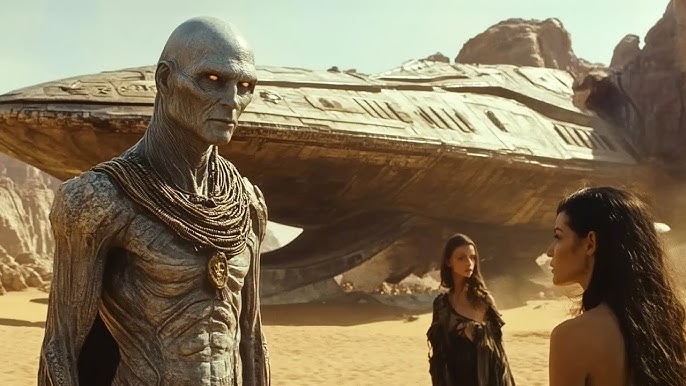
From the first frame, The Anunnaki plunges the viewer into a vast, awe-inspiring world where myth and science collide. The opening sequence, set beneath a glimmering alien sky, immediately establishes the film’s ambition: to re-imagine the ancient Sumerian gods not merely as deities, but as extraterrestrial architects of humanity. The visual design is bold and immersive, with sweeping vistas of ruined temples, massive alien ships bursting from subterranean caverns, and the palpable sense that we are witnessing something far larger than human history alone.

What is particularly compelling about the story is its dual timeline structure. On one hand, we have the modern era — a disparate team of archaeologists, ex-soldiers and rogue scientists discover a buried relic that awakens dormant beings. On the other hand, we have flashbacks to tens of thousands of years ago: the arrival of the Anunnaki, their genetic experiments, their reign, and eventual downfall. This narrative layering gives the film emotional weight: our present is haunted by the past, and the past foreshadows a potential future. The script keeps you on edge as secrets unfold, alliances shift, and the nature of power is questioned.

The characters are well-rounded and grounded, even amidst cosmic spectacle. The film avoids the pitfall of purely one-dimensional heroes or villains. The protagonist — an archaeologist with personal loss and moral ambiguity — is confronted by an Anunnaki figure who is both awe-inducing and tragic, caught between duty to his race and empathy for humanity. Their conflict becomes the emotional core of the film: it’s not simply humans vs. aliens, but questions of identity, creation, legacy, and whether we are masters or merely the next chapter in someone else’s design.

On the technical side, the special effects are outstanding. The alien architecture, the other-worldly skies, the eerie technological artefacts buried beneath Earth’s crust — all of these are rendered with a mix of photorealism and fantastical exaggeration that heightens rather than distracts. Moreover, the sound design and score reinforce the film’s tone: you’ll hear deep resonant drones, ancient chants blended with electronic pulses, heightening the tension in the cavern scenes and the final confrontation. The pacing is deft — there are quieter character moments that allow the audience to breathe, followed by set-pieces of explosive spectacle and spine-tingling mystery.

What really elevates The Anunnaki beyond mere blockbuster fare is the way it wrestles with philosophical ideas without becoming preachy. It asks: if we were engineered, what does that say about free will? If gods can create life, what happens when life turns around and confronts its creator? The film’s climax – in which humanity and the Anunnaki face a common existential threat — becomes a meditation on evolution, responsibility, and the unknowable cosmos. It leaves you with questions that linger long after the credits roll.
In sum, The Anunnaki (2025) is one of the most compelling and ambitious science-fiction films of recent years. It blends mythology, action, character drama and big ideas into a cohesive whole. If you enjoy films that make you think while still delivering dazzling visual moments and a gripping narrative, this one is a must-see. It doesn’t just show us aliens coming to Earth — it forces us to rethink our place in the universe.