
THE SEMINARIAN (2010) | HD MOVIE

January 6, 2026
The Seminarian (2010) unfolds as a quiet yet emotionally charged exploration of desire, faith, and self-denial, drawing the audience into the cloistered world of a young man standing at the crossroads between spiritual devotion and human longing. From its opening moments, the film establishes a contemplative tone, using silence, restrained dialogue, and intimate close-ups to mirror the inner life of its protagonist, Mario, a seminarian preparing for the priesthood. His days are governed by prayer, study, and discipline, yet beneath this rigid structure lies a restless heart struggling to reconcile belief with identity. The film does not rush to explain Mario’s conflict; instead, it allows it to breathe, letting viewers feel the weight of questions that have no easy answers.

As Mario’s friendship with a fellow student deepens, the story begins to pulse with an undercurrent of unspoken attraction and emotional vulnerability. What makes The Seminarian compelling is not sensationalism, but its patience in depicting how desire often manifests in subtle glances, lingering silences, and shared moments that feel both innocent and forbidden. The film treats these interactions with sensitivity, portraying love not as rebellion for its own sake, but as something organic and unavoidable. In doing so, it invites the audience to empathize with Mario rather than judge him, positioning his struggle as profoundly human rather than morally simplistic.

The setting of the seminary itself becomes a character, cold yet beautiful, symbolic of both sanctuary and confinement. Long corridors, dimly lit chapels, and austere classrooms emphasize the contrast between external order and internal chaos. The cinematography favors muted tones and natural light, reinforcing the sense of realism and emotional intimacy. Every visual choice seems designed to reflect Mario’s inner state, as though the walls around him are slowly closing in while his emotions push outward, demanding acknowledgment.

What truly elevates the film is its refusal to offer easy resolutions. Faith is not depicted as an enemy, nor is love portrayed as a simple escape. Instead, The Seminarian presents belief as something sincere and deeply ingrained, making Mario’s conflict all the more painful. His devotion is real, his calling meaningful, yet his feelings are equally authentic. This tension creates a quiet tragedy, one rooted not in dramatic confrontations, but in the slow realization that some choices, no matter how carefully made, will inevitably involve loss.
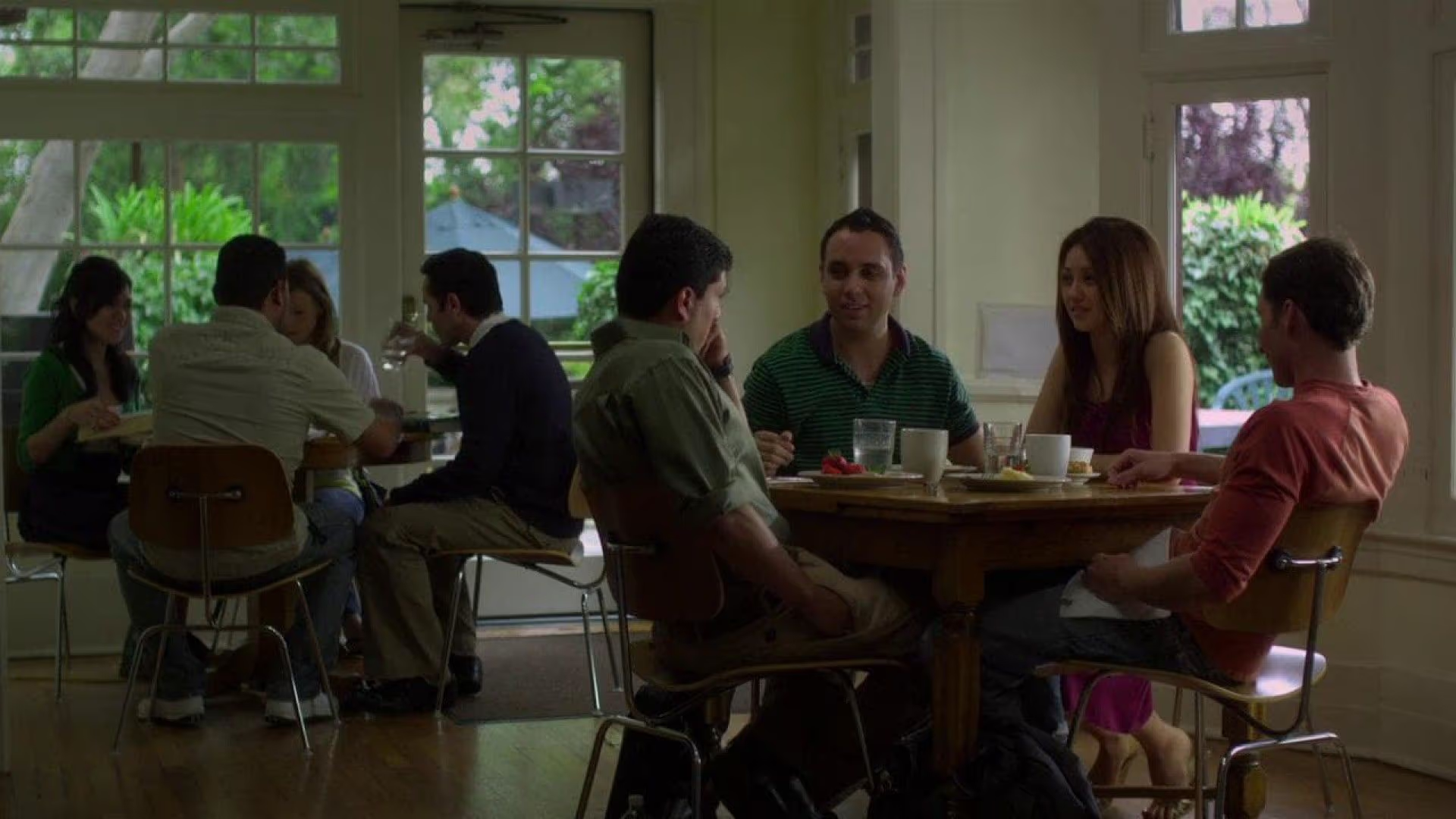
The performances are understated yet powerful, relying on physicality and expression rather than overt dialogue. The lead actor conveys Mario’s turmoil with remarkable subtlety, allowing the audience to sense his fear, confusion, and yearning even when he says nothing at all. Supporting characters, though sparingly developed, serve as mirrors and contrasts, representing different responses to faith, repression, and freedom. Together, they create an emotional landscape that feels intimate and believable.

By the time The Seminarian reaches its conclusion, it leaves viewers with lingering questions rather than definitive answers, which feels entirely intentional. The film resonates not because it resolves Mario’s struggle neatly, but because it acknowledges the complexity of living between duty and desire. It is a quiet, introspective work that trusts its audience to sit with discomfort and ambiguity, making it a poignant and memorable meditation on identity, love, and the cost of choosing who we are allowed to be.