
The Woman King (2022)
September 11, 2025
The Woman King (2022) is a film that transcends the boundaries of a traditional historical epic, blending raw emotion, breathtaking visuals, and an empowering story that lingers in the mind long after the credits roll. Directed with a fierce vision, the movie takes audiences into the heart of 19th-century Africa, where the all-female Agojie warriors of the Kingdom of Dahomey stood as a living testament to strength, loyalty, and resilience. From its very first scene, the film immerses viewers in an atmosphere both intense and deeply human, a celebration of identity, courage, and sacrifice.

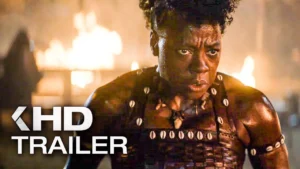
At the center of this tale is General Nanisca, portrayed with astonishing power by Viola Davis, who delivers one of the most commanding performances of her career. Nanisca is a leader forged in the fires of battle and betrayal, guiding her warriors not only with her skill but with her unwavering determination to protect her people. Alongside her is the young and spirited Nawi, played with grace and fire, who represents the new generation of fighters discovering their place within the traditions and the shifting tides of history. Their relationship becomes the emotional spine of the story, blending mentorship, conflict, and love into a powerful narrative thread.

The action sequences are some of the most riveting ever seen in a period drama. Choreographed with precision and shot with a kinetic energy, the battles feel both brutal and balletic, immersing the audience in the sheer physicality of the Agojie. Yet, what makes these scenes so powerful is not just the combat itself, but the sense of honor, discipline, and unity that radiates from the warriors. Each battle feels like a testament not to violence, but to survival and sovereignty in the face of overwhelming odds.

Equally compelling is the way the film navigates complex themes of freedom, colonialism, and moral choices. The Woman King does not shy away from depicting the painful contradictions of the time—where a kingdom fought for its independence yet also confronted its own complicity in the slave trade. These moments elevate the film beyond a simple heroic narrative, offering nuance and depth that challenge audiences to reflect on history’s layers and the price of true liberation.

Visually, the film is a masterpiece. The cinematography captures the grandeur of Africa’s landscapes—the golden hues of the savannah, the lush forests, and the vibrant colors of cultural rituals. The costumes and production design immerse viewers fully in the world of Dahomey, creating an authenticity that makes every frame feel alive. Combined with a powerful score that weaves traditional rhythms with cinematic swells, the sensory experience of the film is nothing short of extraordinary.

Ultimately, The Woman King is more than just a movie—it is a cinematic proclamation of resilience, empowerment, and pride. It delivers an unforgettable combination of thrilling storytelling, historical significance, and emotional resonance. This is a film that not only entertains but inspires, reminding audiences of the power of unity and the indomitable spirit of women who dared to stand against the tides of oppression. Without doubt, it stands as one of the most important and electrifying films of recent years.